In today’s highly competitive business environment, companies are no longer competing solely through the quality of their products or services. Instead, long-term success increasingly depends on how effectively organizations build and maintain relationships with their customers. This is where Customer Relationship Management (CRM) plays a vital role. CRM is a strategic approach that focuses on understanding customer needs, improving interactions, and creating meaningful experiences that foster loyalty and drive sustainable business growth.
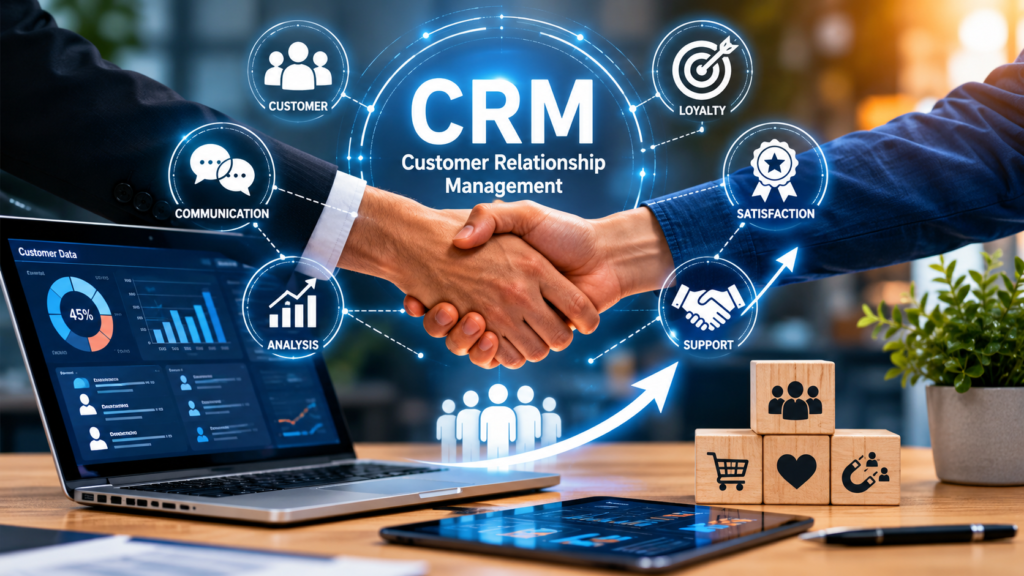
Customer Relationship Management refers to the practices, technologies, and strategies that businesses use to manage and analyze customer interactions throughout the customer lifecycle. The primary objective of CRM is to improve customer satisfaction, strengthen customer retention, and ultimately increase profitability. By collecting and organizing customer data, companies can gain valuable insights into customer preferences, behaviors, and purchasing patterns. These insights enable businesses to make informed decisions and deliver personalized experiences that meet customer expectations.
The importance of CRM has grown significantly in the digital era. Customers today have access to numerous alternatives and can easily switch to competitors if they feel dissatisfied. As a result, businesses must go beyond simply selling products. They need to create strong emotional connections with customers and consistently deliver value. CRM helps organizations achieve this by providing a structured framework for managing customer relationships and ensuring that every interaction contributes positively to the overall customer experience.
One of the most significant benefits of CRM is its ability to enhance customer loyalty. Loyal customers are often the foundation of a successful business because they make repeat purchases, spend more over time, and are more likely to recommend the company to others. Building loyalty requires a deep understanding of customer needs and expectations. CRM systems enable businesses to track customer interactions across multiple channels, including email, social media, websites, and customer service platforms. By maintaining a comprehensive view of each customer, organizations can provide personalized communication and tailored solutions that make customers feel valued and appreciated.
Personalization has become a key factor in customer loyalty. Modern consumers expect businesses to understand their preferences and offer relevant recommendations. CRM systems allow companies to store detailed customer profiles and use this information to create customized marketing campaigns, product suggestions, and promotional offers. When customers receive content and services that align with their interests, they are more likely to engage with the brand and develop a stronger sense of loyalty.
Another critical aspect of CRM is improving customer service. Excellent customer service can significantly influence customer satisfaction and retention. CRM platforms provide customer service teams with immediate access to customer histories, purchase records, and previous interactions. This information enables representatives to respond more effectively and resolve issues quickly. When customers receive timely and efficient support, they are more likely to trust the company and continue doing business with it. Conversely, poor customer service can damage relationships and lead to customer loss, regardless of product quality.
CRM also plays a crucial role in enhancing communication between businesses and customers. Effective communication helps build trust and transparency, which are essential components of long-term relationships. Through CRM systems, organizations can automate communication processes, send personalized messages, and maintain regular contact with customers. Whether it is a welcome email, a follow-up message after a purchase, or a notification about a special promotion, consistent communication helps keep customers engaged and informed.
In addition to strengthening customer relationships, CRM contributes directly to business growth. One way it achieves this is by improving sales performance. CRM systems help sales teams manage leads, track opportunities, and monitor customer interactions throughout the sales process. By providing a clear overview of the sales pipeline, CRM enables sales professionals to prioritize high-potential prospects and focus their efforts more effectively. This leads to higher conversion rates, increased revenue, and improved overall sales productivity.
Data-driven decision-making is another advantage of CRM that supports business growth. Organizations generate vast amounts of customer data every day, but this information is only valuable if it can be analyzed and transformed into actionable insights. CRM systems consolidate customer information into a centralized database, making it easier to identify trends, measure performance, and evaluate customer behavior. Managers can use these insights to develop more effective marketing strategies, improve products and services, and identify new business opportunities.
Marketing departments also benefit significantly from CRM implementation. Traditional marketing approaches often rely on broad campaigns that target large audiences with generic messages. In contrast, CRM enables businesses to segment customers based on demographics, purchasing behavior, interests, and other characteristics. This allows marketers to create highly targeted campaigns that resonate with specific customer groups. As a result, marketing efforts become more efficient, customer engagement increases, and return on investment improves.
Furthermore, CRM supports customer retention, which is often more cost-effective than acquiring new customers. Research consistently shows that retaining existing customers costs less than attracting new ones. Loyal customers not only generate recurring revenue but also serve as brand advocates who promote the company through word-of-mouth recommendations. CRM helps organizations identify customers who may be at risk of leaving and implement proactive retention strategies. By addressing concerns early and offering personalized solutions, businesses can reduce customer churn and strengthen long-term relationships.
The integration of CRM with emerging technologies has further expanded its capabilities. Artificial intelligence, machine learning, and predictive analytics are increasingly being incorporated into CRM platforms. These technologies enable businesses to anticipate customer needs, predict future behaviors, and automate routine tasks. For example, AI-powered CRM systems can recommend products, forecast sales trends, and provide intelligent insights that help organizations make better decisions. This technological advancement allows companies to operate more efficiently while delivering superior customer experiences.
Despite its many benefits, successful CRM implementation requires more than just adopting software. Organizations must cultivate a customer-centric culture in which every department recognizes the importance of customer relationships. Employees should be trained to use CRM tools effectively and encouraged to prioritize customer satisfaction in their daily activities. Leadership commitment is also essential, as managers must support CRM initiatives and ensure that customer-focused strategies are aligned with overall business objectives.
Challenges may arise during CRM implementation, including data quality issues, employee resistance, and integration difficulties. However, these challenges can be overcome through careful planning, clear communication, and ongoing training. Businesses that invest time and resources into developing a comprehensive CRM strategy are more likely to achieve positive outcomes and maximize the value of their CRM systems.
In conclusion, Customer Relationship Management is far more than a technological solution; it is a strategic approach to building strong, lasting relationships with customers. By enhancing customer loyalty, improving service quality, supporting personalized communication, and enabling data-driven decision-making, CRM helps organizations create meaningful customer experiences that drive long-term success. In an increasingly competitive marketplace, businesses that prioritize customer relationships are better positioned to retain loyal customers, attract new ones, and achieve sustainable growth. As customer expectations continue to evolve, CRM will remain an essential tool for organizations seeking to strengthen their competitive advantage and build a foundation for future business success.