In today’s highly competitive business environment, growth is no longer determined solely by the quality of products or services. While innovation and operational efficiency remain important, the ability to build and maintain strong customer relationships has become one of the most significant factors influencing long-term success. As businesses expand, managing customer interactions, tracking sales opportunities, and delivering personalized experiences become increasingly complex. This is where a Customer Relationship Management (CRM) strategy plays a critical role.
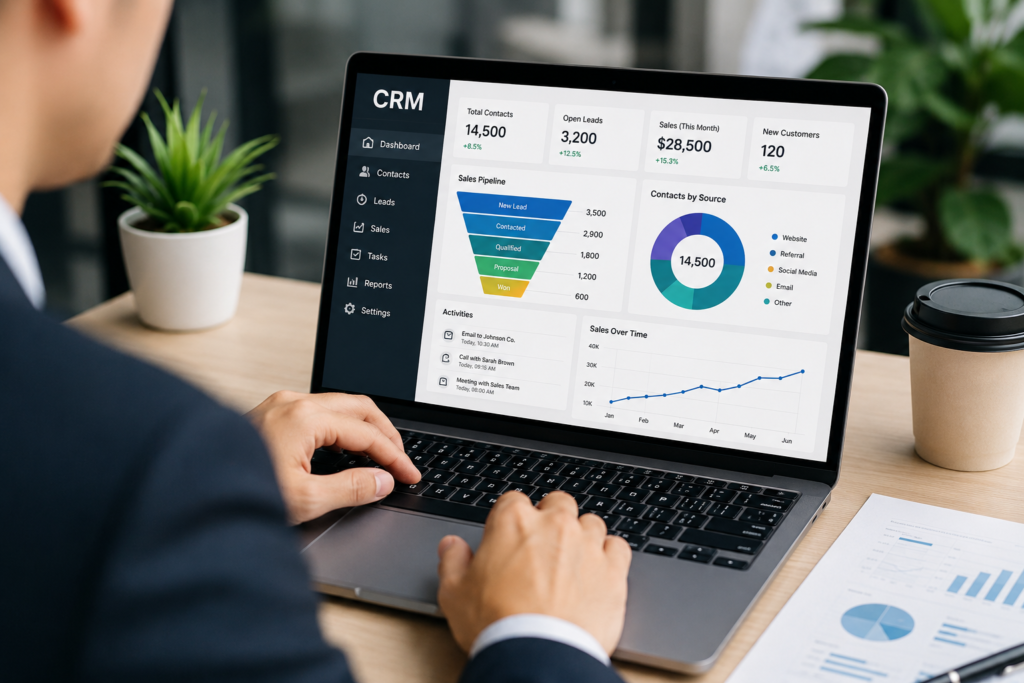
A CRM strategy is more than simply adopting software. It is a comprehensive approach that helps organizations understand their customers, streamline communication, improve customer satisfaction, and drive sustainable growth. For growing businesses, implementing a CRM strategy can mean the difference between scaling successfully and struggling to manage increasing customer demands.
As a business grows, customer data often becomes scattered across different platforms, spreadsheets, emails, and team members. Sales representatives may keep their own records, customer service teams may use separate systems, and marketing departments may store information in different databases. This fragmented approach creates inefficiencies and makes it difficult to gain a complete understanding of customer behavior and needs.
A CRM strategy addresses this challenge by centralizing customer information into a single system. Every interaction, purchase history, inquiry, and communication is recorded and accessible to relevant team members. This centralized view allows businesses to provide consistent and personalized experiences across all customer touchpoints. Instead of relying on incomplete information or guesswork, employees can make informed decisions based on accurate and up-to-date customer data.
Customer expectations have evolved significantly in recent years. Modern consumers expect businesses to understand their preferences, anticipate their needs, and provide timely responses. Companies that fail to meet these expectations risk losing customers to competitors who offer more personalized experiences. A well-executed CRM strategy enables businesses to gather valuable insights about customer behavior and preferences, making it easier to tailor products, services, and communications to individual needs.
Personalization has become a key driver of customer loyalty. When customers feel understood and valued, they are more likely to remain loyal to a brand and make repeat purchases. A CRM strategy helps businesses identify customer preferences, purchase patterns, and engagement history, allowing them to deliver relevant recommendations and targeted marketing campaigns. This level of personalization strengthens customer relationships and increases the likelihood of long-term retention.
Another important advantage of a CRM strategy is its ability to improve sales performance. As businesses grow, managing sales pipelines becomes more challenging. Opportunities can easily be overlooked, follow-ups may be delayed, and valuable leads may fall through the cracks. Without a structured system in place, sales teams often struggle to prioritize activities and maintain consistent communication with prospects.
A CRM strategy provides sales teams with the tools and processes needed to manage leads effectively. By tracking customer interactions and monitoring sales opportunities throughout the buying journey, businesses can ensure that no prospect is neglected. Automated reminders, task management features, and detailed customer profiles help sales representatives stay organized and focused on high-priority opportunities. As a result, conversion rates improve, sales cycles become shorter, and revenue growth accelerates.
Marketing effectiveness also benefits significantly from a strong CRM strategy. Growing businesses often invest substantial resources in marketing campaigns, yet many struggle to measure results accurately or target the right audiences. A CRM system provides valuable data that helps marketers understand customer demographics, behaviors, and preferences. This information allows businesses to create highly targeted campaigns that resonate with specific customer segments.
Rather than sending generic messages to a broad audience, companies can develop personalized marketing initiatives based on customer interests and previous interactions. Targeted marketing not only improves engagement rates but also increases return on investment by reducing wasted advertising spend. With better data and insights, marketing teams can continuously refine their strategies and achieve stronger results.
Customer service is another area where a CRM strategy delivers significant value. As customer bases expand, maintaining high levels of service quality becomes increasingly difficult. Delayed responses, inconsistent communication, and unresolved issues can damage customer relationships and harm a company’s reputation. A CRM strategy helps customer service teams manage inquiries efficiently by providing immediate access to customer histories and previous interactions.
When service representatives have a complete understanding of a customer’s relationship with the company, they can resolve issues more quickly and provide more personalized support. Faster response times and improved service quality contribute to higher customer satisfaction levels, which in turn lead to increased loyalty and positive word-of-mouth referrals. In many industries, exceptional customer service has become a major competitive advantage, making CRM an essential component of business growth.
Operational efficiency is another compelling reason why growing businesses need a CRM strategy. As organizations expand, manual processes often become bottlenecks that limit productivity. Employees may spend excessive amounts of time searching for information, updating records, or coordinating with other departments. These inefficiencies can hinder growth and increase operational costs.
A CRM strategy helps automate routine tasks and streamline workflows across the organization. Automated data entry, email scheduling, lead assignment, and reporting capabilities reduce administrative burdens and allow employees to focus on higher-value activities. Improved collaboration between departments also enhances productivity and ensures that everyone is working with the same information. This increased efficiency enables businesses to scale operations without proportionally increasing costs.
Data-driven decision-making has become a critical success factor for modern businesses. Companies that rely on intuition alone often struggle to adapt to changing market conditions and customer expectations. A CRM strategy provides access to real-time analytics and performance metrics that support informed decision-making. Business leaders can track sales performance, customer acquisition trends, retention rates, and other key indicators that influence growth.
These insights help organizations identify opportunities for improvement, allocate resources more effectively, and respond proactively to emerging challenges. Instead of making assumptions about customer needs or market trends, businesses can base their strategies on reliable data. This analytical approach improves strategic planning and increases the likelihood of achieving growth objectives.
As competition continues to intensify across industries, customer retention has become just as important as customer acquisition. Acquiring new customers is often significantly more expensive than retaining existing ones. A CRM strategy helps businesses nurture long-term relationships by monitoring customer engagement and identifying signs of dissatisfaction before they lead to churn.
By proactively addressing customer concerns and delivering personalized experiences, businesses can strengthen loyalty and increase customer lifetime value. Loyal customers not only generate recurring revenue but also serve as brand advocates who recommend products and services to others. This organic growth can be a powerful driver of business success.
Ultimately, a CRM strategy is not simply a technology investment; it is a business growth strategy. It enables organizations to build stronger customer relationships, improve operational efficiency, enhance sales and marketing effectiveness, and make data-driven decisions. As businesses continue to grow, the complexity of managing customer interactions increases, making a structured CRM approach essential for sustainable success.
Companies that prioritize customer relationships and invest in effective CRM strategies are better positioned to adapt to changing market demands, exceed customer expectations, and achieve long-term growth. In an era where customer experience often determines competitive advantage, a CRM strategy is no longer optional for growing businesses. It is a fundamental requirement for success.