As businesses grow, managing customer relationships becomes increasingly complex. What once worked with spreadsheets, email threads, and manual follow-ups often becomes inefficient as the number of customers, leads, and sales opportunities expands. This is where a Customer Relationship Management (CRM) solution plays a critical role. A CRM system serves as a centralized platform that helps businesses organize customer information, streamline communication, improve sales performance, and deliver better customer experiences. However, choosing the right CRM solution is not always straightforward. With countless options available on the market, growing businesses must carefully evaluate their needs before making a decision.
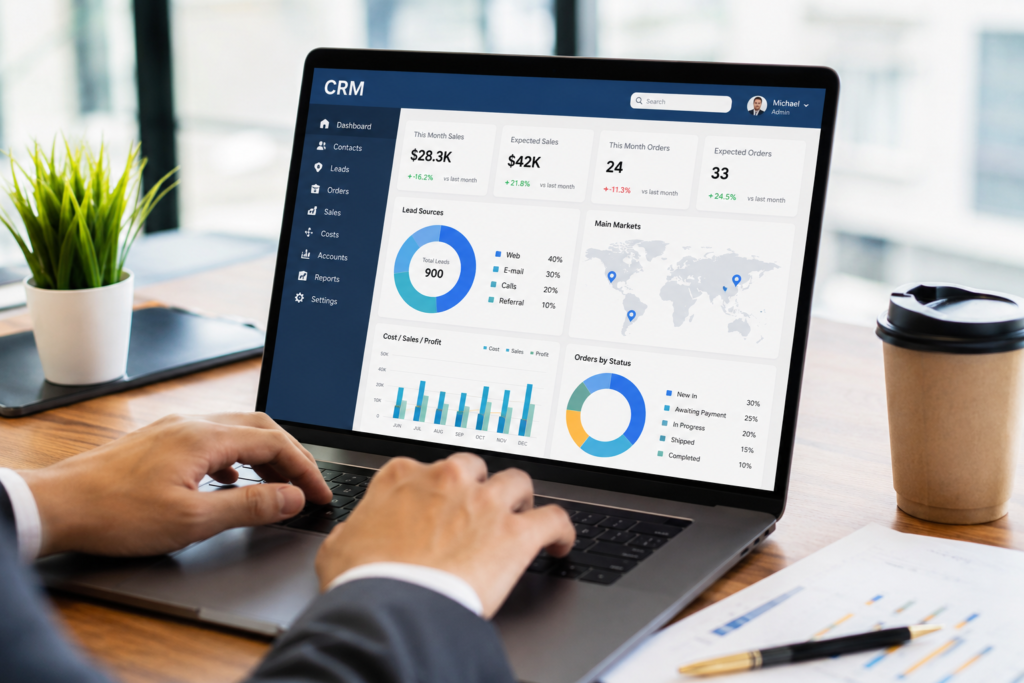
A CRM is much more than a digital address book. Modern CRM platforms are designed to manage the entire customer lifecycle, from lead generation and sales tracking to customer support and long-term relationship management. By bringing all customer interactions into a single system, businesses gain a comprehensive view of their customers, allowing teams to make informed decisions and provide personalized experiences. This level of visibility is particularly important for growing organizations that need scalable processes to support expansion.
One of the first considerations when selecting a CRM solution is understanding the specific goals of the business. Different companies have different priorities. Some may focus on improving sales performance, while others may prioritize customer service, marketing automation, or account management. A CRM that excels in sales pipeline management may not necessarily provide the advanced marketing tools required by another organization. Before evaluating software options, businesses should identify their most pressing challenges and determine how a CRM can help address them. Having clear objectives ensures that the chosen platform aligns with both current needs and future growth plans.
Ease of use is another crucial factor that should never be overlooked. Even the most feature-rich CRM system can become ineffective if employees find it difficult to use. User adoption is one of the biggest challenges organizations face when implementing new technology. A CRM with an intuitive interface, simple navigation, and straightforward workflows can significantly improve adoption rates across teams. Employees are more likely to embrace a system that simplifies their daily tasks rather than complicates them. During the evaluation process, businesses should take advantage of free trials and product demonstrations to assess the user experience firsthand.
Scalability is equally important for growing businesses. While a CRM may meet current requirements, it should also be capable of supporting future expansion. As customer databases grow, sales teams increase in size, and business operations become more sophisticated, the CRM must be able to handle additional users, larger volumes of data, and more advanced workflows. Choosing a scalable solution prevents the need for costly migrations and disruptions later. Businesses should consider not only their immediate needs but also where they expect to be in the next three to five years.
Integration capabilities have become a major consideration in today’s interconnected business environment. Most organizations rely on multiple software tools to manage different aspects of their operations, including email marketing platforms, accounting software, customer support systems, e-commerce solutions, and communication tools. A CRM should integrate seamlessly with these existing systems to create a unified ecosystem. Effective integrations reduce manual data entry, eliminate information silos, and improve overall efficiency. When evaluating CRM options, businesses should carefully review the available integrations and ensure compatibility with their current technology stack.
Data security and compliance should also be high priorities when choosing a CRM solution. Customer data is one of the most valuable assets a business possesses, making it essential to protect that information from unauthorized access and cyber threats. Reputable CRM providers invest heavily in security measures such as encryption, access controls, regular backups, and compliance with industry regulations. Businesses operating in regions with strict data privacy laws should verify that the CRM provider complies with relevant standards and regulations. Trust and credibility can be significantly damaged if customer information is compromised, making security a non-negotiable factor.
Another key consideration is customization. Every business operates differently, and no CRM can perfectly fit every organization’s processes out of the box. The ability to customize fields, workflows, dashboards, reports, and automation rules allows businesses to tailor the system to their unique requirements. A flexible CRM can adapt to evolving business needs without requiring extensive development resources. Customization ensures that the software supports the organization’s processes rather than forcing the organization to change its operations to fit the software.
Automation capabilities are increasingly important in modern CRM platforms. As businesses grow, repetitive administrative tasks can consume valuable time and resources. CRM automation can streamline activities such as lead assignment, follow-up reminders, email campaigns, data updates, and reporting. By automating routine processes, employees can focus on higher-value activities such as building relationships and closing deals. Automation not only increases productivity but also reduces the risk of human error, resulting in more consistent and reliable operations.
Reporting and analytics functionality should not be underestimated. One of the greatest advantages of a CRM system is its ability to transform raw customer data into actionable insights. Business leaders need accurate information to evaluate performance, identify trends, forecast revenue, and make strategic decisions. A robust CRM should provide customizable reports and real-time dashboards that offer visibility into key metrics. Access to meaningful data helps organizations optimize their sales strategies, improve customer engagement, and identify opportunities for growth.
Cost is naturally an important factor in any software investment. However, businesses should avoid making decisions based solely on price. While budget constraints are real, choosing the cheapest CRM solution can lead to limitations that hinder growth in the long run. Instead, organizations should evaluate the overall value provided by the platform. This includes considering features, scalability, support, security, integrations, and potential productivity gains. A CRM should be viewed as a strategic investment rather than an operational expense. The right solution can generate significant returns through improved efficiency, higher customer retention, and increased sales revenue.
Customer support and vendor reputation also play important roles in the selection process. Implementing a CRM is a significant undertaking, and businesses may require assistance during setup, training, and ongoing use. Reliable customer support can make a substantial difference in the success of a CRM implementation. Organizations should research vendor reviews, customer testimonials, and industry reputation before making a commitment. A provider with a strong track record of customer satisfaction is more likely to offer a positive long-term experience.
Ultimately, choosing the right CRM solution requires a thoughtful and strategic approach. There is no universal CRM that works perfectly for every business. The ideal solution depends on an organization’s goals, processes, growth plans, and operational requirements. By focusing on usability, scalability, integration capabilities, security, customization, automation, analytics, and overall value, growing businesses can make informed decisions that support long-term success.
In an increasingly competitive marketplace, customer relationships are a primary driver of business growth. A well-chosen CRM solution empowers organizations to strengthen those relationships, improve operational efficiency, and create exceptional customer experiences. As businesses continue to evolve, investing in the right CRM platform can provide the foundation needed to support sustainable growth and maintain a competitive advantage for years to come.